



I’ve been wanting to write something more substantial about the situation in Iran, the incredible bravery that the Iranian people are showing in their fight for freedom, and the horrific brutality of the Islamic Regime (reportedly thousands of protesters have been killed in days). Dictatorships don’t fall easily.
The people have no weapons, yet the state has many and are brutal with them. The people are punished for speaking; imprisoned, tortured, raped, and killed. Worse, many are fearful because of the harm that may come to their loved ones—family, children, parents, and friends.
The state also controls communication, internal and external. And when people can’t speak openly, they don’t know what each believes, let alone organize.
In this environment, it is rare for dictatorships to be overthrown. And certainly not without either sufficient support from other interested parties, or internal ones coming over to the people’s side.
But what does that support look like? I think people with far more knowledgeable than me would be better equipped to assess the right approach—but there are many available tools ranging from diplomatic punitive measures, to further economic sanctions and pressures (especially on countries buying oil from Iran—China accounts for about 80%), to supplying arms and strategic intel to people on the ground, and the targeting key IRGC figures, while avoiding civilian casualties. In other words, it is not necessary to declare war on Iran in order to move the needle.
Again, the specifics are probably left to those with both expertise and special knowledge on the situation, but I do not want the Iranians to have sacrificed their lives for nothing, and the Islamic Regime should not be allowed to continue to rob the Iranian people of their freedom.
To that end, instead of a lengthy essay from me, I wanted to share a guest post by Maryam Mehrtash (of the Substack This is Not a Memo), an Iranian woman I had met a number of years ago. It’s sort of a primer on the history of all of this from the perspective of someone who longs to return to a free Iran and see her family.
- Katherine
Why Iran Is at a Breaking Point
How repression and economic collapse are pushing a nation beyond fear, written by an Iranian woman
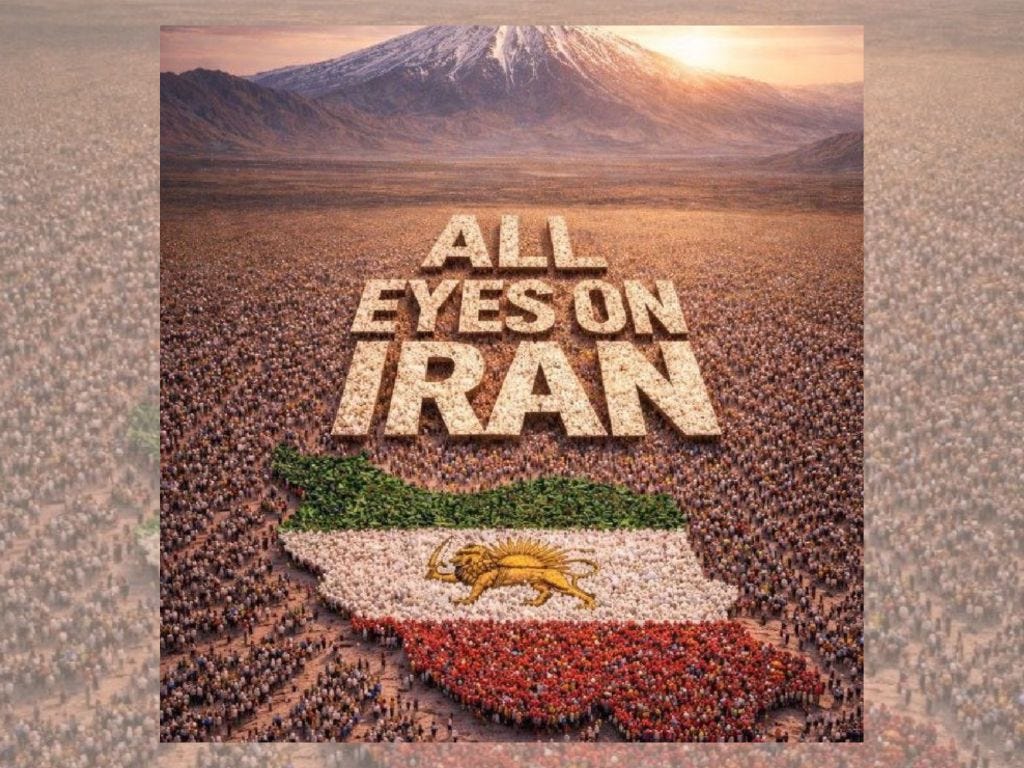
I am an Iranian-Canadian-American woman. I was born in Mashhad, but my parents fled after the Revolution during the Iran-Iraq war when I was only two years old. My life has always existed between two truths that live in the same body and never fully reconcile.
Like many in the diaspora, I am a bridge between two worlds: one of safety and opportunity in the West, and another of deep, ancestral connection to a land where most of my family still lives. A land where the air smells like saffron and gasoline and jasmine, and where even the most ordinary acts of living have become political.
I dream of returning to Iran freely, not as a visitor with fear in my throat, but as a daughter of that soil. But the risk is too high. I am a mother. And the uncertainty of a system that can make you disappear for being in the wrong place at the wrong time is a price I cannot pay. It is the price Nazanin Zaghari-Ratcliffe, a British-Iranian dual national, paid for six years of her life, separated from her own two-year-old daughter in 2016. There are many stories like hers.
I pray to share tea with my cancer-stricken grandmother one last time, to swap stories with cousins I mostly know through Instagram and Facebook. I want to take my half-Persian children into bazaars where pistachios are still warm in your palm, and beneath mosaic tile work so precise it feels like patience carved into stone. I want to swim in the Caspian Sea, with my son Caspian, and ski in Dizin again, once a world-class resort compared to the Swiss Alps.
Because Iran is not just politics. Iran is beauty. Iran is a history that did not begin in 1979.
And that is the first thing people miss.
Watching Iran From the Outside
If you are not Iranian, it is easy to watch Iran through headlines the way you’d watch a film with the sound off. You see the crowds, the smoke, the scarves, the crackdowns. But you do not hear the quieter soundtrack underneath it all: the daily math of survival, the humiliation of a collapsing currency, the fatigue of living inside a system designed to control your body and your voice.
You do not feel what it is like to spend your life in a waiting room.
There is also an overwhelming amount of misinformation. People skim a summary, absorb a narrative, and speak with certainty about a country they have never visited or lived in, often to people whose families are still living it.
Unless you are from Iran, or have family living through the daily grind of living within a repressive regime, it is hard to truly understand the gravity of the situation.
I don’t usually write about geopolitics, but I do write about courage, fear, leadership, psychology, and the economics of incentives, and understanding what is happening in Iran through those lenses matter here.
Iran’s breaking point is not a single event. It is an accumulation.
So let me set the scene, plainly, without spectacle.
The Shah: Modernization at a Price
In the 1970s, Iran was a secular monarchy ruled by Mohammad Reza Pahlavi. He inherited power in the aftermath of the 1953 coup d’etat orchestrated by the United States (CIA) and the United Kingdom (MI6), which overthrew Prime Minister Mohammad Mossadegh over oil interests (shocking!). That wound still shapes Iranian distrust of the West today, but that’s a story for another essay.
The Shah is often remembered through two very different lenses. To some, he was a visionary modernizer who expanded education, granted women the right to vote, and pursued what he called the Great Civilization. To others, he was a Western-backed autocrat, increasingly detached from the people he ruled.
The truth lives in the tension between those narratives.
The Shah had genuine, sweeping ambitions for Iran. He believed deeply in the country’s ancient greatness and saw himself as the steward of its return to global prominence. Through what became known as the White Revolution, he pushed rapid modernization: infrastructure projects, industrialization, land reform, expanded education, and political rights for women. On paper, it looked like progress, and in many ways, it was.
But progress imposed without consent carries a cost.
Modernization moved faster than social trust could keep up. Political participation lagged behind economic reform. Dissent was treated not as feedback, but as threat. And progress at gunpoint doesn’t always feel like progress.
Alongside modernization came repression. The Shah’s secret police, SAVAK, became infamous for surveillance, intimidation, and brutality. Living inside a society where speech can be punished does something to a population’s nervous system. It teaches people to whisper. And when people whisper long enough, resentment doesn’t disappear, it simply finds a larger container. Imagine living in a country where your neighbor, your butcher, or even your cousin could be an informant. The psychological toll was immense.
To be clear, the Shah was not personally sadistic. He did not delight in cruelty. But leadership does not require malice to enable harm. By concentrating power, silencing dissent, and delegating repression, he became responsible for the system he allowed to operate in his name.
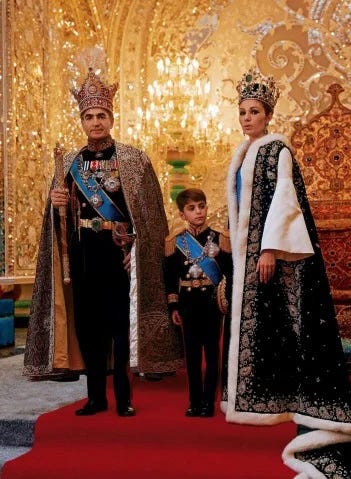
At the same time, Iran was awash in oil wealth. The Shah hosted extravagances that made Gatsby look modest, while most Iranians were just trying to stay afloat. By the late 1970s, inequality had become staggering. For the first time in its history, Iran could not feed itself. Food was imported, prices soared, inflation accelerated, and people watched their savings lose value almost overnight.
History has a way of repeating itself. When people are economically squeezed and psychologically suffocated, unrest follows. Inequality becomes revolution when the party is visible from the breadline.
By 1977, the richest 10% of the population controlled nearly 38% of the country’s income, a level of inequality even higher than that of the United States at the time. The “Great Civilization” felt great for the elite and for the Shah’s inner circle, but for everyone else, it was a party they weren’t invited to. Many felt culturally alienated and economically left behind.
What the people of Iran wanted was not ideology.
They wanted modern life and dignity.
Participation, not paternalism.
Progress that felt chosen, not imposed.
And when those desires went unmet, the ground beneath the monarchy quietly began to crack.
Khomeini: The Seduction of Promises
Into this pressure cooker stepped Ayatollah Ruhollah Khomeini, his name means “spirit of Allah”. He came from a lineage of clerics, but what’s less often discussed is the trauma that shaped him early. Khomeini’s father was murdered when he was just an infant for his activism. He was first raised by his mother and aunt, and then after their deaths, by his elder brother.
Psychology teaches us that early trauma doesn’t vanish, it hardens into belief systems. You cannot fully understand who someone becomes without understanding what formed them. Khomeini’s rise cannot be separated from how loss, grievance, and authority fused into a worldview that would later justify absolute control.
He became the symbol and the vessel for a revolution that was, at the beginning, a coalition of the unlikely: religious conservatives, secular liberals, students, workers, families, people who did not agree on a future but agreed on one thing: the present had become unbearable.
Revolutions don’t start as tyranny.
They start as hope.
And boy, did he make hopeful promises. My parents, who were there, still remember the speeches. It was a populist dream. Khomeini promised free water, free electricity, housing for the poor, economic justice. He promised a government that would serve the people, not the palaces, and to create a new Iran where the poor would be uplifted. For a nation desperate for change, his words were like rain in a desert. They drank it all up.
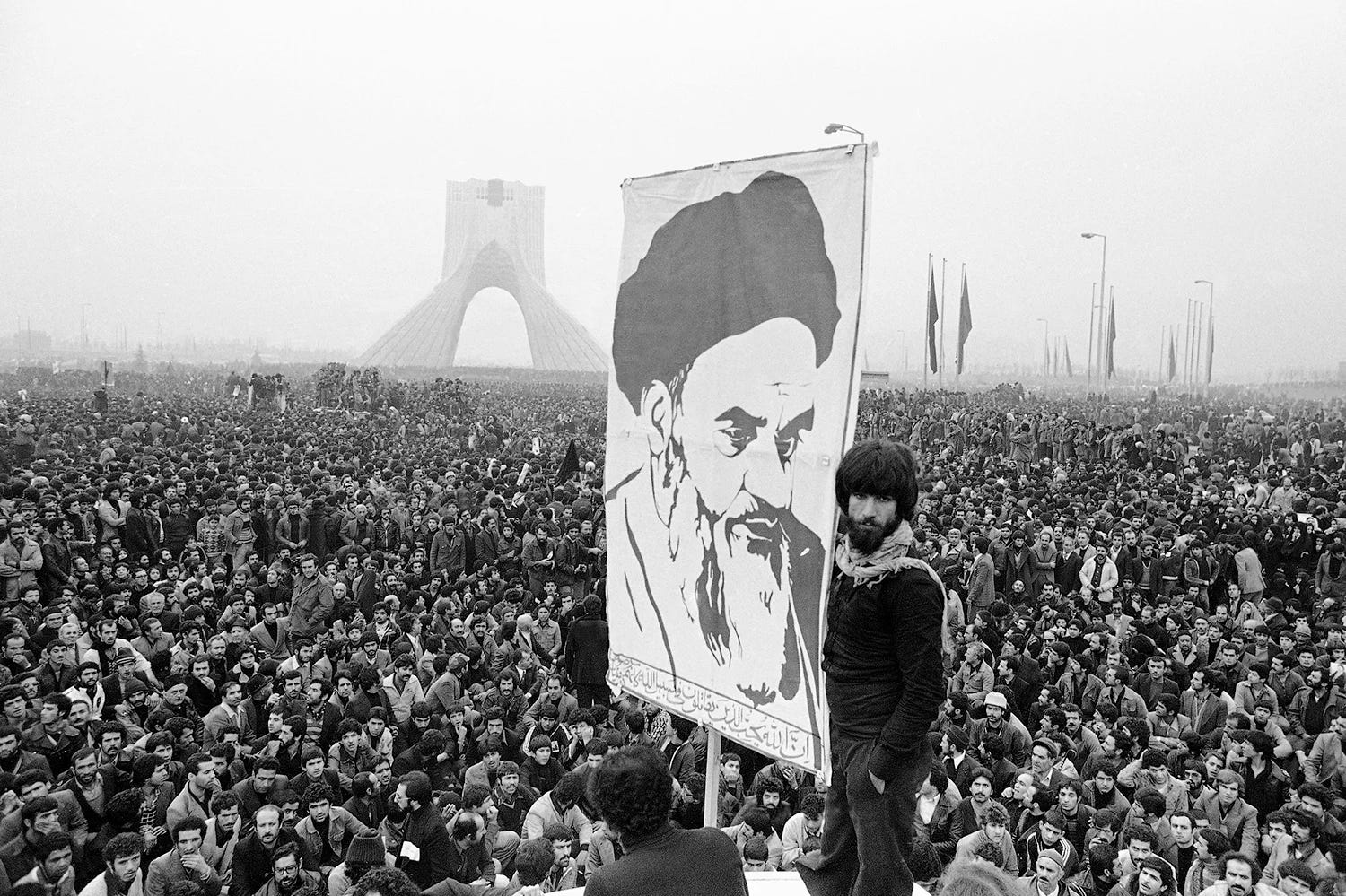
From his exile in France, he became the face of the opposition. He was a charismatic figure who skillfully channeled the widespread anger and disillusionment into a single revolutionary force.
To a population that felt ignored and exploited, these promises were intoxicating. They weren’t slogans. They were a vision of dignity.
It sounded almost too good to be true.
And it was.
When a population is exhausted, hope becomes a kind of oxygen. People breathe it fast. They do not always notice what else comes with it until it is too late.
What wasn’t shouted in those speeches was Khomeini’s radical reinterpretation of Shia Islam. Khomeini’s entire claim to rule was based on a concept called Velayat-e Faqih, or the Guardianship of the Jurist. Traditionally, this was a minor Shia doctrine that gave clerics limited guardianship over the vulnerable, like orphans and widows. Ironic, given his own childhood.
Khomeini twisted it into a justification for absolute clerical rule over an entire nation. His argument was simple: God’s law (Sharia) must govern the state, and since clerics are the experts in God’s law, they must rule. With his victory, the state became not just a government, but a system of discipline, with his interpretation of religion weaponized as law.
For many Iranians, it was never about religion. Most Iranians believe in God, but not in theocracy. Iran has always been religiously plural: Muslims, Christians, Jews, Bahá’ís, and others have lived there for centuries. Faith was never the issue. Control was.
The Betrayal: How the West Paved the Way
Here is a part of the story that is often overlooked: the role the West played in the Shah’s downfall. It wasn’t just a popular uprising; it was a geopolitical chess move.
Western governments were deeply entangled in Iran’s political trajectory long before 1979. Because you know, oil. Iran holds roughly 10-12% of the world’s oil reserves, the fourth largest, making it one of the most strategically important energy producers on the planet.
For decades, the Shah was a key Western ally, a bulwark against Soviet influence in the Middle East. But by the late 1970s, that alliance was fraying. The Shah was pushing for higher oil prices through OPEC and pursuing a more independent foreign policy, that was increasingly at odds with Washington’s interests.
In the final months of his rule, Western leaders were openly discussing Iran’s instability, the regional oil shock, and the risks of regime collapse. These conversations are documented in official U.S. records, including materials from the Office of the Historian.
Now for the geopolitical tea. The West, particularly the Carter administration, was getting nervous. The Shah, their guy in the Middle East, was looking shaky. The oil flow was disrupted. And here’s the kicker: they knew he was sick. The Shah was secretly battling cancer, a fact known to a handful of people and, as it turns out, Western intelligence agencies. He was physically ill, and surrounded by yes men he could no longer trust. Isolation is deadly for leaders.
At the Guadeloupe Summit in January 1979, US President Jimmy Carter and other Western leaders made a cold calculation. The Shah was a sinking ship. It was time to find a new lifeboat.
Declassified documents reveal a secret dialogue between the Carter administration and Khomeini’s camp. In a stunning betrayal, the US signaled to Khomeini that the Iranian military would not stand in his way. Khomeini, the man who called America “The Great Satan,” agreed. In return, Khomeini promised to ensure the continued flow of oil (shocking!?) and to remain neutral in the Cold War. He promised stability. He promised to be a partner.
It was the ultimate betrayal, a cold, calculated move that sacrificed a decades-long ally for what they thought was a safer bet. For the Shah, it was abandonment.
The West rolled out the red carpet for the revolution.
The Hangover: From Hope to Tyranny
The Shah fled in January 1979. Khomeini returned from exile to a hero’s welcome. But the coalition of students, liberals, and religious conservatives that had united to oust the Shah quickly discovered that the after-party was cancelled. Khomeini and his clerical faction consolidated power with ruthless efficiency. The promises of freedom were replaced with the dictates of the Mullahs. The Islamic Republic was born, and the dream of a free Iran died with it. A new, more brutal form of tyranny began.
The Iranian Revolution was a seismic shift. The promises that were made were quickly forgotten. The West believed it had secured its interests and minimized regional chaos. Instead, it helped clear the path for a regime that would become far more hostile, far more repressive, and far less predictable than the monarchy it replaced.
Dissent was treated not as disagreement but as a threat. The dream of liberation mutated into a new cage, and for women in particular, the cage came with fabric, punishment, and surveillance.
Culture was censored. Artists fled or were silenced. My grandmother, an actress and singer, was imprisoned, tortured, raped, and beaten for four years. Others, like the iconic popstar Googoosh, were forced into silence.
This is the wound that never healed.
Almost 47 years later, the people have risen again, this time under economic conditions far more brutal than those our parents rose up against.
The Economics: A Regime of Control
Today, the Iranian economy is not a free market; it is a tool of survival for the regime. The Supreme Leader, Ali Khamenei, holds ultimate authority over every branch of government.
But the real “muscle” of the economy is the Islamic Revolutionary Guard Corps (IRGC). The IRGC is less a military and more a mafia with a flag, running a shadow empire that controls up to half the country’s GDP, including the black market and oil exports. They use this wealth to fund regional conflicts and maintain their grip on power, while the average citizen is left to deal with the fallout of international sanctions, internal corruption, and a cost of living so high that basic food like eggs are unaffordable.
The Daily Cost of Living: The Invisible Tax
This is where the “gravity” of the situation becomes personal.
The average monthly salary in Iran is around $254. The average rent for a one-bedroom apartment in a city is $285. The math doesn’t work. The average person literally cannot afford to live.
My Gen Z cousin works in a clothing store six days a week and makes $80 a month. Let that sit. Even someone earning the average salary in Iran cannot afford a one-bedroom apartment, even if they spent every single dollar on rent.
Meat has become a luxury. Eggs, once a staple, now cost more than gold did before the revolution. People are not budgeting, they are surviving in a state of permanent economic deficit.
Since 2018, the Iranian rial has lost over 90% of its value. As of late 2025, average annual inflation rose to 42.3%, meaning prices are rising more than twelve times faster than in the United States. The dollar’s open-market rate has surged more than 70% in a single year.
This isn’t just “inflation” or a bad economy; it is the collapse of purchasing power itself.
It is a system engineered to break the human spirit—one that teaches people, over time, that no amount of work will ever be enough, that effort no longer leads to dignity, stability, or safety.
Repression paired with economic suffocation isn’t just hardship.
It’s control.
And systems built on control, fear, and exhaustion do not last forever.
The Uprisings: A History of Bravery
The current unrest in Iran is not an isolated event.
It is the latest chapter in a long history of extraordinary bravery.
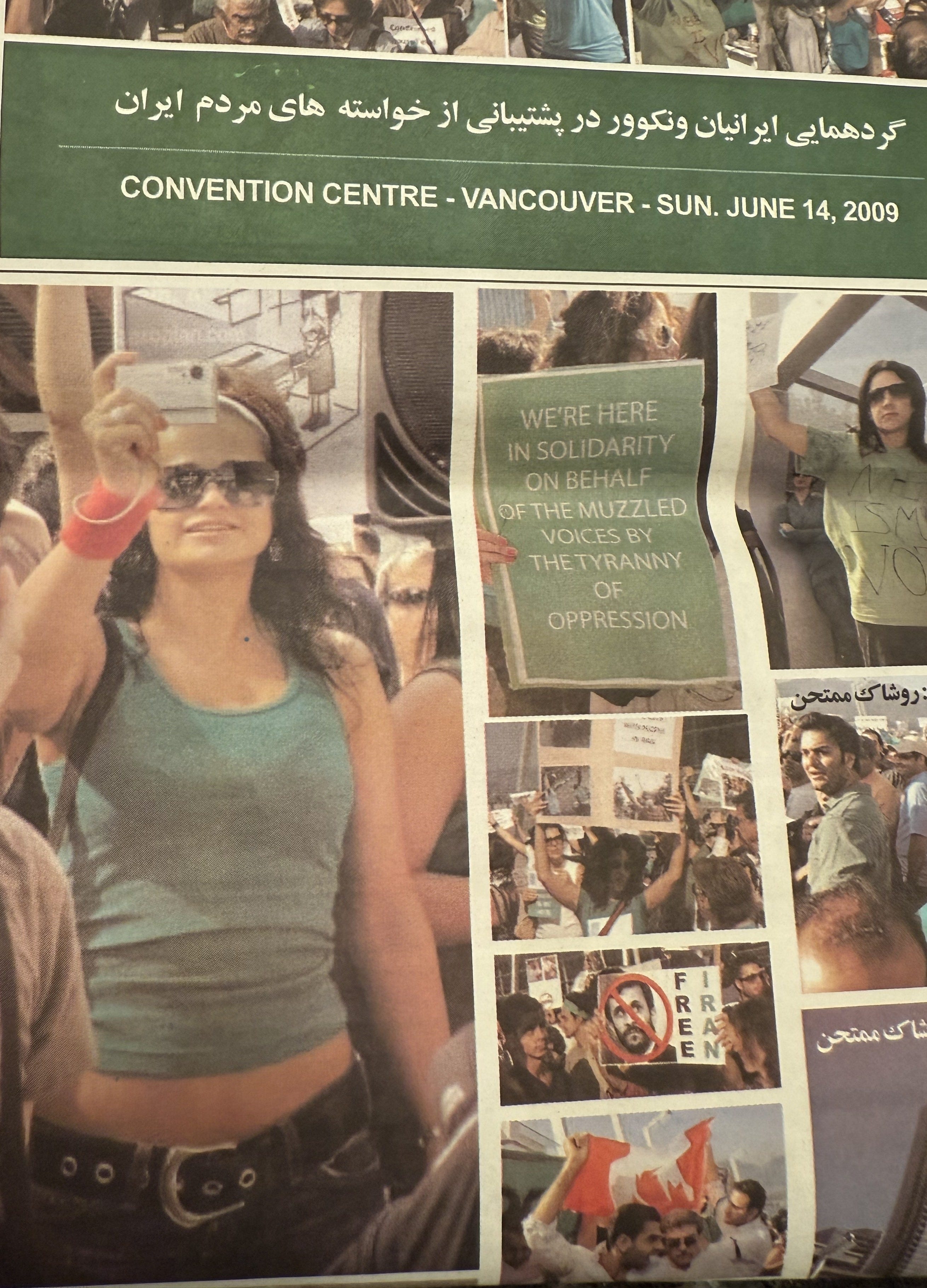
Over the past three decades, Iranians have risen again and again, each time learning, each time pushing further:
1999: Student protests ignited on university campuses, marking the first major post-revolutionary challenge to the regime.
2009: The Green Movement, where millions poured into the streets asking a single question: “Where is my vote?”
2017–2019: Nationwide protests driven by fuel prices, unemployment, and economic collapse.
2022: The Woman, Life, Freedom uprising, sparked by the killing of Mahsa Amini, which transformed resistance into a mass cultural revolt led by women and youth.
Each time, the regime has responded with the same playbook:
internet shutdowns, mass arrests, lethal force, intimidation.
And each time, something else happens too.
The fear threshold drops.
People are no longer asking for reform.
They are asking for an ending.
Regimes survive on inertia, until they don’t. Every protest cycle doesn’t just weaken the system; it proves the system can be weakened. And in the calculus of collapse, precedent is everything.
When a population has nothing left to lose, something shifts. Fear stops functioning as a deterrent and starts becoming familiar. And when fear becomes familiar, it loses its monopoly.
Every cycle teaches the people how the regime operates, and what dissent costs.
But it also teaches the regime something it cannot unlearn:
Fear does not work forever.
On December 28, 2025, Tehran’s Grand Bazaar closed in protest, a historic signal of political rupture. The Bazaar has long been an economic and symbolic heartbeat of the country; when it shuts down, it means merchants are willing to risk everything.
Students, always the moral engine of Iran’s movements, have once again taken the lead. Universities across the country have reportedly become protest centers, chanting “Death to the Dictator”.
By the eighth day, mass protests have broken out across the entire country, with demonstrations and unrest in 222 locations across 78 cities in 26 of the 31 provinces.
Images and videos have been circulating this past week showing regime symbols being torn down, statues defaced, and flags burned.
On January 2, 2026, President Trump threatened via X: “If Iran shots and violently kills peaceful protesters, which is their custom, the United States of America will come to their rescue. We are locked and loaded and ready to go.”
According to multiple sources, at the time of publishing this essay, there have already been 20 deaths confirmed, with many more arrests and injuries unaccounted for due to information blackouts. As always, the true numbers may take months to fully surface.
Women, students, workers, and families are risking everything to say no to fear, and tyranny. We see your courage, and your bravery, and we stand with you.
The Venezuela Connection
One final important note. As I write this, the world is watching the fall of Nicolás Maduro in Venezuela. On January 3, 2026, the United States carried large scale strikes against Venezuela, and captured Maduro and his wife Cilia Flores, charging them with narco-terrorism conspiracy, cocaine importation, and weapon charges.
Trump has stated that the U.S. is “in charge” of the country and plans to control their oil industry (shocking!?). Venezuela holds the largest oil reserves in the world.
For years, Iran and Venezuela have operated as sanctions-evasion partners, trading oil, gold, weapons, fuel, and logistical support to keep their respective regimes afloat in the face of global isolation. Their alliance has never been ideological. It has been transactional: survival through mutual defiance.
That’s precisely why Venezuela matters to Iran, and why the fall of Maduro is a terrifying signal for the regime. It proves that even with Russian support and a powerful military, a regime can collapse when the “security gap” opens and the people refuse to be silenced any longer. The Islamic Republic is now more isolated than ever. Their strategic allies are falling like dominoes.
What will it take for Iran? It will take the continued, relentless bravery of the people on the ground, combined with a total fracture within the regime’s security forces. When the soldier on the street realizes he is shooting at his own sister, his own mother, for a regime that can’t even afford to pay him a living wage, the end begins.
Regimes like this do not fall because the world posts about them on Instagram.
They do not fall because outsiders want them to.
They fall when:
internal legitimacy collapses
fear stops working
and enough insiders decide the regime can no longer protect them, economically, morally, or politically
That is when power shifts.
And once that shift begins, it is very difficult to stop.
What a Free Iran Could Mean
Amidst the chants for freedom, “death to Khomeini”, you may also hear something that surprises outsiders: calls for the return of the Shah.
O Shah of Iran! Return to Iran!
This is the final battle. Pahlavi will return.
They are chanting for the exiled Crown Prince of Iran, Reza Pahlavi, the eldest son of the last monarch. Let’s be clear: this is not a sudden nostalgia for monarchy. It is a cry for leadership.
In the absence of any organized opposition within the country, they are reaching for a symbol, a name they know, someone who can represent their struggle on the world stage. Someone who can speak when they are being silenced.
To his credit, Reza Pahlavi appears to understand the assignment. He has stated repeatedly that he is not seeking to restore the throne. His goal, he says, is to help guide a transition to a secular, democratic Iran, where the people themselves decide their future.
He’s offering to be a bridge, not a king. For a people who have been betrayed by both monarchs and mullahs, that distinction matters.
I want you to take a moment and imagine it. A free Iran. A country of 92.8 million educated, creative, and resilient people rejoining the world. It would mean women living as full citizens, not legal minors under moral policing. It would mean Iran’s identity returning to its people. A culture that has given the world Rumi and Hafez, algebra and modern medicine, unleashed from the shackles of theocracy.
The fall of the regime in Iran wouldn’t just be a victory for the Iranian people; it would be a geopolitical earthquake that would reshape the Middle East and send shockwaves of freedom across the globe. It would be the ultimate plot twist in a story that has been defined by tragedy for nearly half a century.
There is also a global diaspora, over four million Iranians, watching from afar. Waiting. Hoping to return home. Carrying the guilt of safety while their families risk their lives in the streets.
I write this for my family in Iran.
I write this so you understand that when you see a woman in Tehran take off her scarf, you understand what she is fighting for. It is not a small act. She is not performing rebellion. She is practicing sovereignty.
She is asserting ownership over her body, her life, her future. She is the bravest person in the room.
Please don’t look away. Share this not as a spectacle, or clickbait, but as a country. A real place, with real people, with real longing, and a future that deserves to be more than survival.
Long live the brave people of Iran.
With Courage,
Maryam
Born in Iran, raised in Vancouver, and now living in Los Angeles, Maryam Mehrtash is an award-winning media executive, brand and marketing strategist, entrepreneur, and mom to two toddlers.
Her work spans global campaigns for IP including The Grammys, Yellowstone, Star Trek, The Late Show with Stephen Colbert, SpongeBob, Marvel Cinematic Universe, and RuPaul’s Drag Race, partnering with brands like Google, GM, Verizon, VISA, and Amazon.
Please check out Maryam’s Substack, This is Not a Memo.
Wow
I hope Iran has finally reached the tipping point. At the same time, I fear that will mean rivers of blood no matter which side wins. And I would not take Donald Trumps promise of support seriously.