


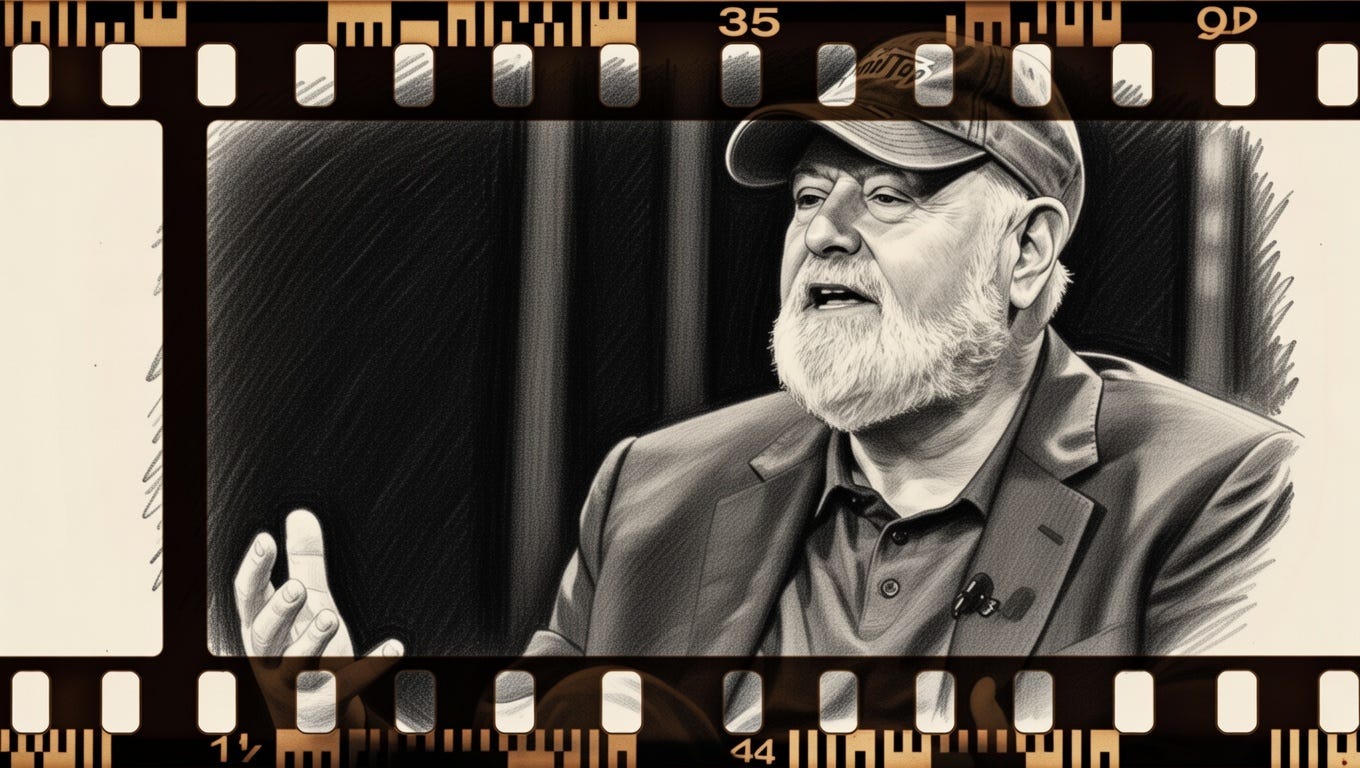
Last night, I’ve stumbled across a decade-old recording of an interview with Rob Reiner and Cary Elwes (with interruptions by Geoffrey Rush). It feels a bit strange, a bit melancholy, but I’m grateful for having that little time capsule to hold on to and refer back to. I was a different person then. We all were.
I conducted this interview during the Toronto International Film Festival, where Reiner’s film Being Charlie was being screened. Co-written by his son Nick, the film follows the story of a future governor and his experiences with an addict son who fights against recovery and rehab. It is clearly a deeply personal project, and that many years later the reality behind the scenes turned rather tragic—is an understatement, to be sure.
We have lost someone who created so many memories for us, nostalgic, but ever-present. Most people are lucky if they make one incredible film. Rob made so many classics: This Is Spinal Tap, Stand by Me, The Princess Bride (my personal favorite), When Harry Met Sally, Misery, A Few Good Men… that is no fluke.
He is a one-of-a-kind talent.
During my interview with him, I asked Rob Reiner about the significance of humor in his work (amongst other things):
“There’s humor to all his films,” Cary Elwes, sitting next to us (virtually unaltered by time), quickly chimes in—almost doting on Reiner, with so much love, humility, and pride.
To which Reiner replies: “If you’re going to make something that’s reflective of life… when you start out to make a film or a painting—whatever it is—it’s going to reflect life experience. Because you want people to sit there and say, ‘Oh, I can see that. I relate to that. I know what that’s about.’ Then, if you’re doing it, you’ve got to have the humor. It’s life—it’s funny and it’s sad.”
He pauses for a moment.
“You know, it’s why there are those classic masks,” he explains. “There’s the comedy mask and the tragedy mask, and if you can find a way to blend them, to have them dance around so that one doesn’t hurt the other, then you’ve got a shot at doing something a little better.”
I tell him that I sometimes find myself laughing hysterically in the middle of tears—that the two can coexist so harmoniously and surprisingly. Out of pain can come laughter. And vice versa.
“Audiences do need a break too,” Elwes points out. “You can’t just make them sit through a drama and not give them at least a moment to—” He searches for the right word.
“Release,” says Reiner.
“Yes, release.”
We discuss how the film mirrors some of Nick’s experiences, particularly having a famous father whose shadow he must live in—an experience Reiner is quick to say he understands.
And indeed he does. His father, too, is very famous: Carl Reiner (whom I previously also interview alongside another legend, Dick Van Dyke, for The Guardian, and prior to that for The A.V. Club).
“The things Nick has gone through—his own experiences—it’s not all related to being the son of… you know?” Reiner says. “And nor is mine with my dad. But I certainly know that element. I do understand how difficult that is.”
The great thing, I say, is that they’ve both channeled this into creating.
“Well, that’s the thing,” Reiner replies. “That’s the thing. Finding your own way is the tricky part, you know? And that’s what the movie is about. That’s why I like the way it ends. We’re not saying everything’s going to be smooth sailing—that everything’s going to be perfect or all worked out. But we at least see that Charlie, at the end of the movie, is beginning to forge his own path.”
Before we end, I bring up The Princess Bride and how much it shapes our childhoods—and continues to shape our adulthoods. The impact it has.
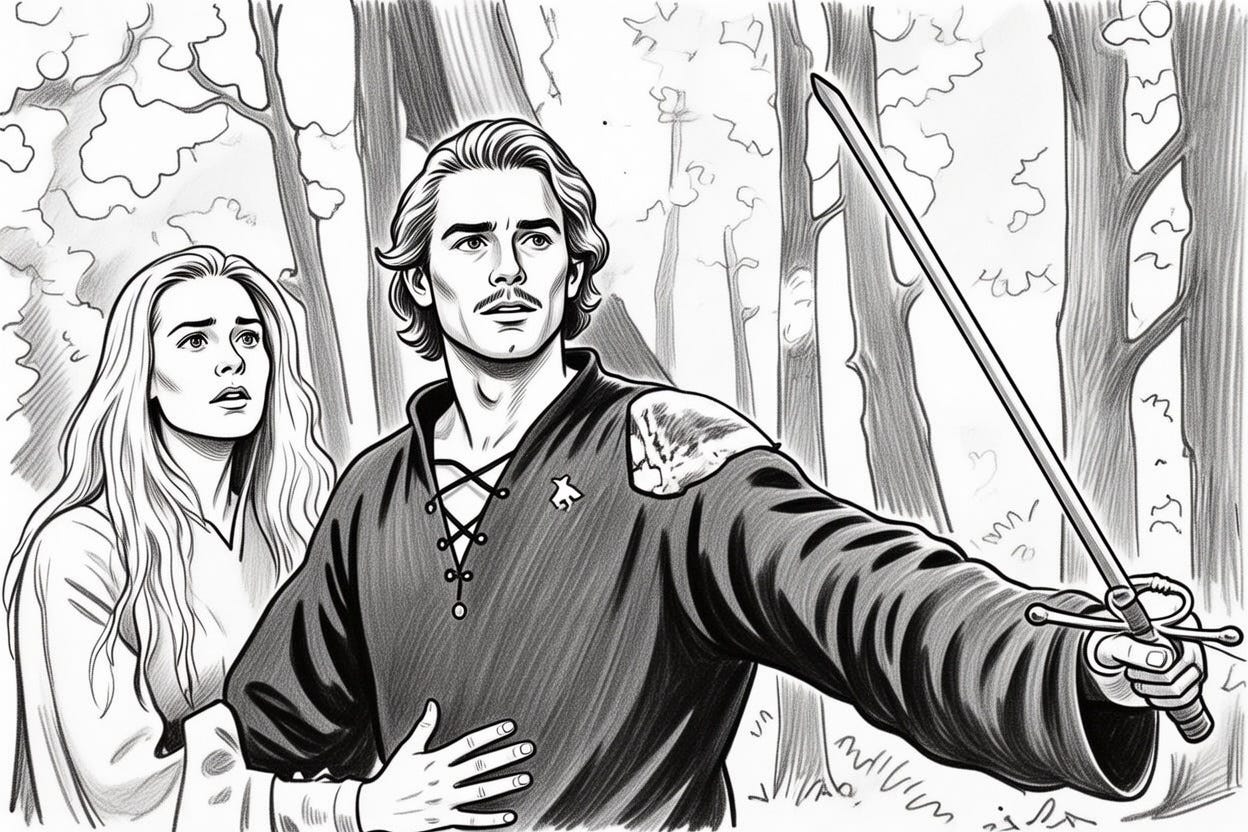
“It’s the coolest feeling in the world,” Reiner admits. “That it has stood the test of time—at least up until now—and to see people come up to me who see the movie when they are eight, nine, ten years old, and now have young kids. They tell me they’re introducing it to their children, and their kids are loving it. You know, people having ‘As you wish’ written inside their rings and—”
“—tattooed on their bodies,” Elwes jumps in. He continues, amazed: “I’ve seen whole dialogues—speeches—a Miracle Max speech on someone’s back. You have no idea.”
“I was telling Cary on the flight up here,” Reiner adds, “there was a guy sitting across from me who said, ‘I named my son Wesley.’”
“It’s incredible,” Elwes says. “It’s the gift that keeps on giving, really.”
There’s something about this movie that makes people not merely recall it warmly, but want to make it an intrinsic part of them. They want it to live in them—in their names, their bodies.
At this point, I confess that I once see a man in New York City’s Central Park doing a reading of The Princess Bride. He is fully in character—and bears a striking resemblance to Elwes. We may have wondered if—
Elwes quickly catches on. “Is Cary desperate? He’s in Central Park trying to audition for work…”
Reiner then asks if we’ve heard about the guy who gets thrown off a plane.
“Did you hear about that?” he asks.
I shrug, but Elwes replies, “Oh, that’s right.”
“There’s a guy who gets on a plane wearing a T-shirt,” Reiner explains. “It says, ‘My name is Inigo Montoya. You killed my father. Prepare to die.’ They throw him off the plane! They think he wants to kill someone.”
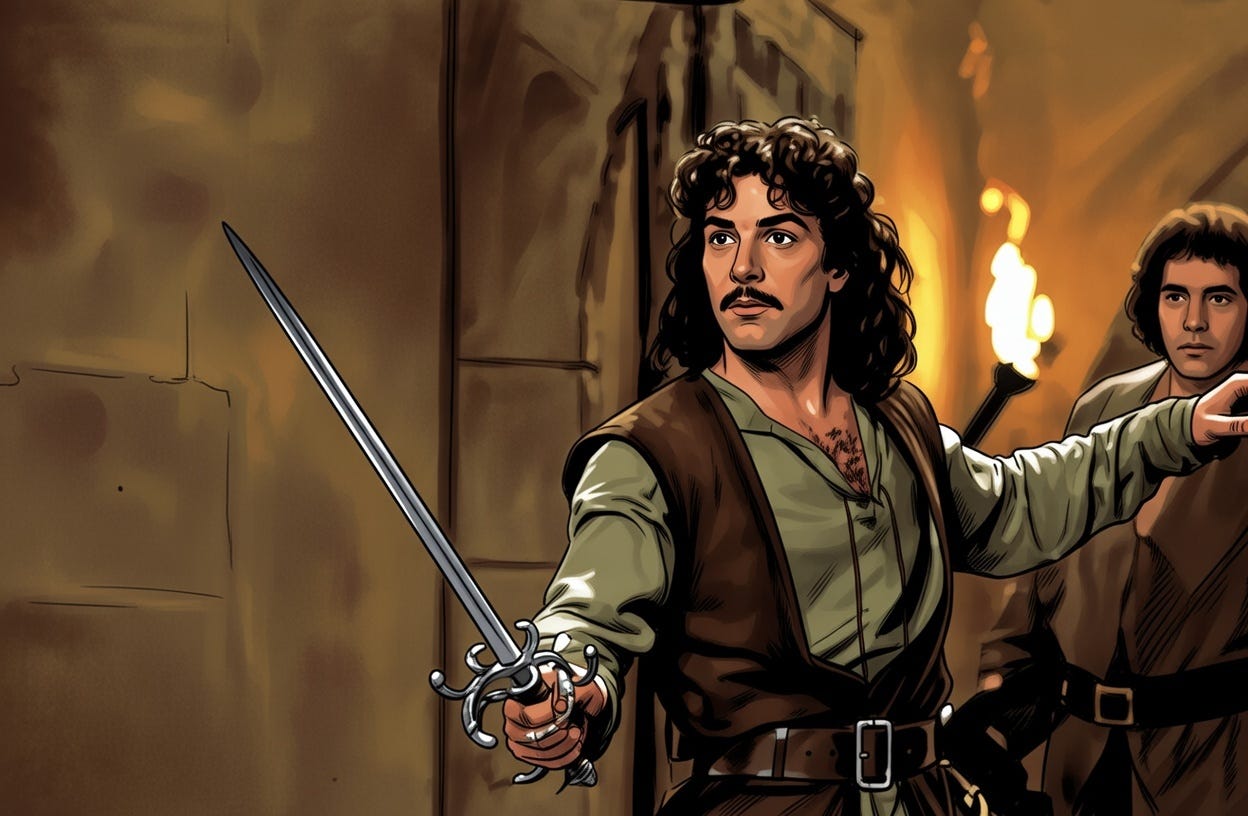
I am aghast at the cultural ignorance.
“The passenger next to him doesn’t understand,” Elwes explains. “She just sees the words ‘Prepare to die,’ gets scared, and alerts the pilot.”
Apparently, Wallace Shawn doesn’t go a day without someone yelling “Inconceivable!” at him, Reiner tells me.
And then our time is up.
The comedy and tragedy masks don’t cancel each other out. Sometimes, they sit side by side. Other times, they speak together through powerful work. And life. Definitely life.
If you found this story useful, please consider supporting my work by sharing, becoming a paid subscriber, or making a one-off donation via Buy Me a Coffee ☕️.
Also, check out my book: No Apologies: How to Find and Free your Voice in the Age of Outrage!
An excellent piece about the late, great Rob Reiner! May he rest in peace! 🇺🇸❤️🌸🌺💐🕯️🕊️Its also so cool you got to interview two legends like Carl Reiner and Dick Van Dyke! Happy 100th Birthday to Mr. Van Dyke by the way! 🎉🎂🥳 Rob was clearly a very intelligent, brilliant and perceptive man. He understood human emotions very well and knew how to push the audience’s buttons! He knew what to do to get what reaction out of those viewing his films. He pulled many of them from personal experience. It’s so sad to hear about the problems he had with Nick. Nick is a troubled soul but that doesn’t give him a license to kill his parents. I hope Nick receives life in prison without the possibility of parole. Rob Reiner will always be remembered as a good actor and one of the greatest directors of our time. He will never live in his father’s shadow again. Carl Reiner was a giant but so was Rob in his own right! What President Trump said about him after his death was disgusting and vile! Left, right or center we can all agree on that.
Rob made so many classic films: Stand By Me, This is the Spinal Tap, A Few Good Men, Misery, The Princess Bride, North, The American President, Ghosts of Mississippi, When Harry Met Sally, Alex & Emma, The Sure Thing, and many more. He was a genius in the studio no doubt about it. He was also a prolific actor let us not forget. Most famously as Mike Stivic in the classic TV show All in the Family. He also appeared in the Smothers Brothers, Happy Days, The Andy Griffith Show, Batman, Gomer Pyle USMC, The Beverly Hillbillies, Room 222, The Partridge Family, The Odd Couple, The Simpsons, 30 Rock, Hannah Montana, Wizards of Waverley Place, Frasier, Curb Your Enthusiasm, Saturday Night Live, and too many more to list.
His films were nominated for the Academy Awards and the BAFTA Awards on numerous occasions. He was nominated for the Golden Globe Award nine times. He won two Primetime Emmys for Best Supporting Actor in a Comedy Series in 1974 and 1978. In 1999, he received a star on the Hollywood Walk of Fame. In 2014, he was honored for his incredible career by Film at the Lincoln Center. In total, he was nominated for top film honors on 32 occasions. Three of his films have been inducted into the National Film Registry. A little-known fact is that he saved the classic TV show Seinfeld from getting cancelled. As a studio executive at Castle Rock Studios, he greenlit two of the greatest films ever made The Shawnshank Redemption and The Green Mile. His legacy is second to none!
Thanks so much for sharing the poignant piece. Statistically speaking, I suspect comedy and tragedy neither add nor subtract, they interact. In an experiment one of my students did about a decade ago, the most negative shift in affect/mood occurred when a sad story (about a grandparent's cancer) was accompanied by whimsical background music from an adjacent room.