


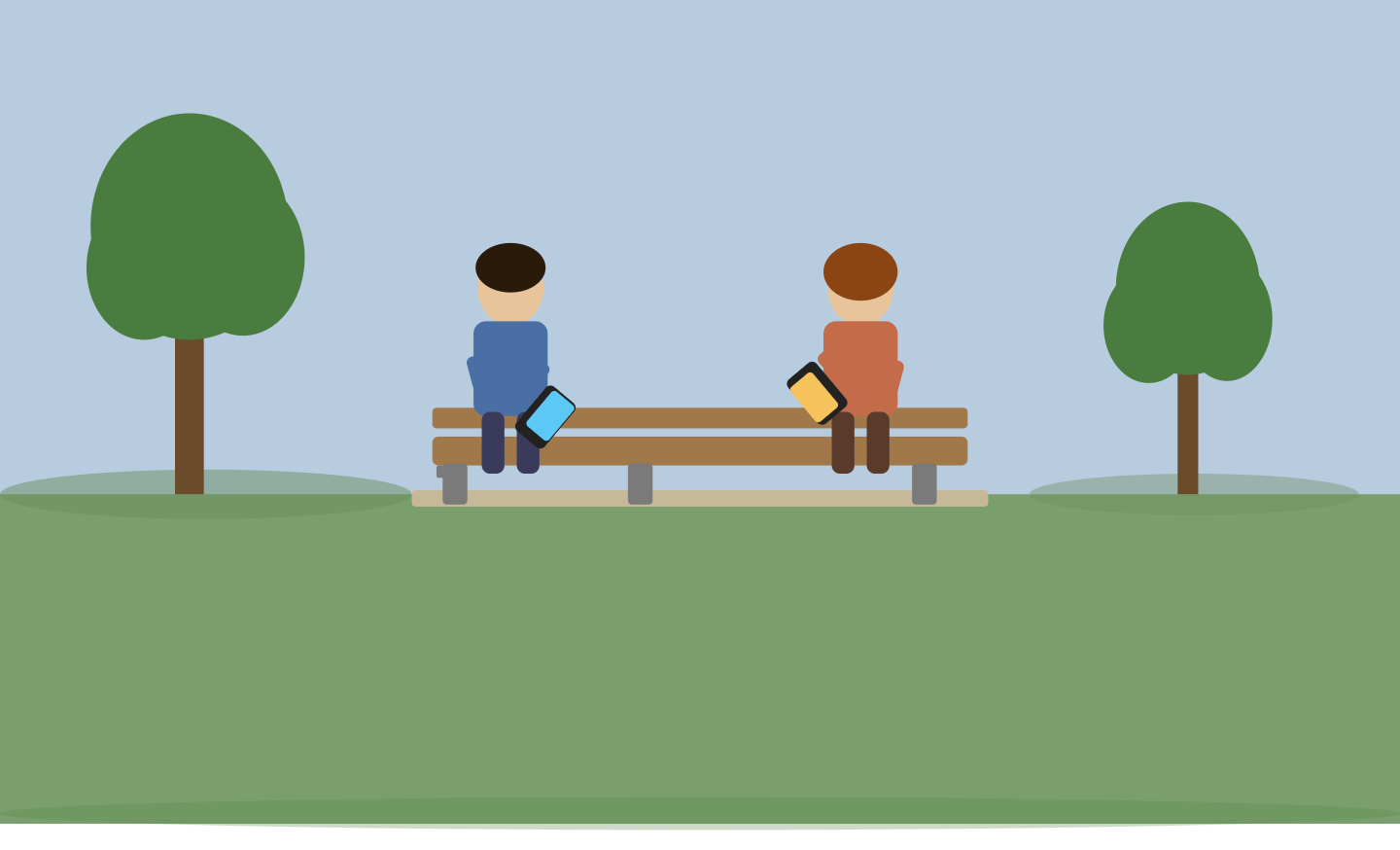
I was at a film festival when a stranger decided she already knew everything about me. She managed to catch half a sentence, draw a conclusion, and was mid-accusation before I'd even had a chance to finish my thought. It struck me, later, that this is more or less how we relate to each other now.
Before I make a sweeping claim about what's tearing society apart, I should acknowledge that sweeping claims about what's tearing society apart are usually wrong because humanity is a complex system and it’s rarely just one thing. Still, this one is worth considering.
Thanks to the Internet and social media, we are more connected than ever. But we are also more divided. I think it’s making us hate each other not because of what it exposes us to, but because of what it hides. We see too much of what people think, and not nearly enough of who they are.
When we spend time with people, particularly in-person, we get to know them through experience and their behavior towards us and others. Are they warm? Funny? Fun to be around? Do they make us feel good about ourselves, or judged? Do they have our backs when we need them? Are they interesting to talk to? Thoughtful? We form our understanding of them through these very fundamental things.
But once we move into the virtual world, that understanding gets flattened. Even people we already know in person are suddenly reduced to a feed of their opinions. As we all know, none travel more divisively than political ones.
We also only ever see the parts they choose to present, constrained by a character limit, and crucially, never subjected to being questioned.
A study published in PNAS in October 2025 seems to support my hypothesis. Researchers at the Medical University of Vienna found that increased connectivity, rather than serving as a unifying force, has actually been driving division.
Researchers used a computational model grounded in two social mechanisms:
1) Homophily (the tendency to befriend like-minded people)
2) Social balance (the tendency to form groups where friends agree and enemies oppose each other)
They found that above a critical threshold of social connectivity, societies undergo a sharp, explosive transition into a deeply polarized state, splitting into two roughly equal opposing camps.
Apparently, we’re psychologically driven to minimize “cognitive dissonance” in our social triangles, and so people either conform or move out into the “enemy” camp.
When there are few connections, these clusters stay small and isolated, resulting in lower overall polarization. Once a certain connectivity threshold is reached though, polarization grows as people divide more into bigger clusters.
Smartphone and social media onset around 2008 had significantly increased the average number of close social connections people, according to the study—from about 2.2 in 2004 to around 4 by the mid-2020s. The model used in the study correctly predicts both the timing and the magnitude of polarization’s rise in the United States.
Significantly, once polarization takes hold, simply reducing social connectivity back to previous levels is not enough to reverse it. It would need to fall dramatically.
I recall having a conversation at a friend's place, with her neighbor also present. I said something that provoked a reaction. The neighbor didn't speak up, but I caught a brief look of disgust cross her face. I asked: "It seems like what I said upset you, do you mind telling me why?" She did. I explained my thinking further, and that alleviated her concern entirely.
A similar thing happened waiting in line at a film festival. A woman nearby overheard me telling a friend that I don’t think restaurants should have tips. She interjected angrily: “I had to say something. I was a waitress, we survive on tips, and I think it’s horrible that people like you—”
I stopped her. “I don’t think you caught the whole conversation. Can I explain?”
What she hadn’t heard was the rest: that I find tipping inconsistent and that it lets employers off the hook for paying fair wages. My actual position was that if I ran a restaurant, I’d pay a proper wage, skip the tips, and give staff equity in the business — so the better it does, and the longer they stay, the more they genuinely benefit. Her whole demeanor shifted.
This is the crux of it. So often, we only get fragments of people's actual thoughts—truncated by time, by medium, by what they choose to show. And the whole, as they say, is greater than the sum of its parts. But we rarely get the whole. We get pieces. Even close friends never see you in your entirety, but at least they see enough to understand you—including when you misspeak or say something they disagree with. They understand where you are coming from because they actually know you.
But the less time we spend together, the more we reduce each other to an avatar.
And increasingly, people reduce themselves to one too. The "MAGA" in the bio. The blue wave. The assortment of flags. These things collapse a person into an ideology, and since that's often all we have to go on, we judge accordingly, projecting every belief we associate with that label onto the individual behind it.

Think about driving. All you know about the person ahead of you is their car and how they're operating it—whether they're courteous or cutting you off. Information is sparse, so we fill in the rest. Often it’s enough to dislike their car to project those same feelings onto the driver. But a sticker that says "I love dogs" shifts something. Suddenly they're not just a vehicle. They're a person.
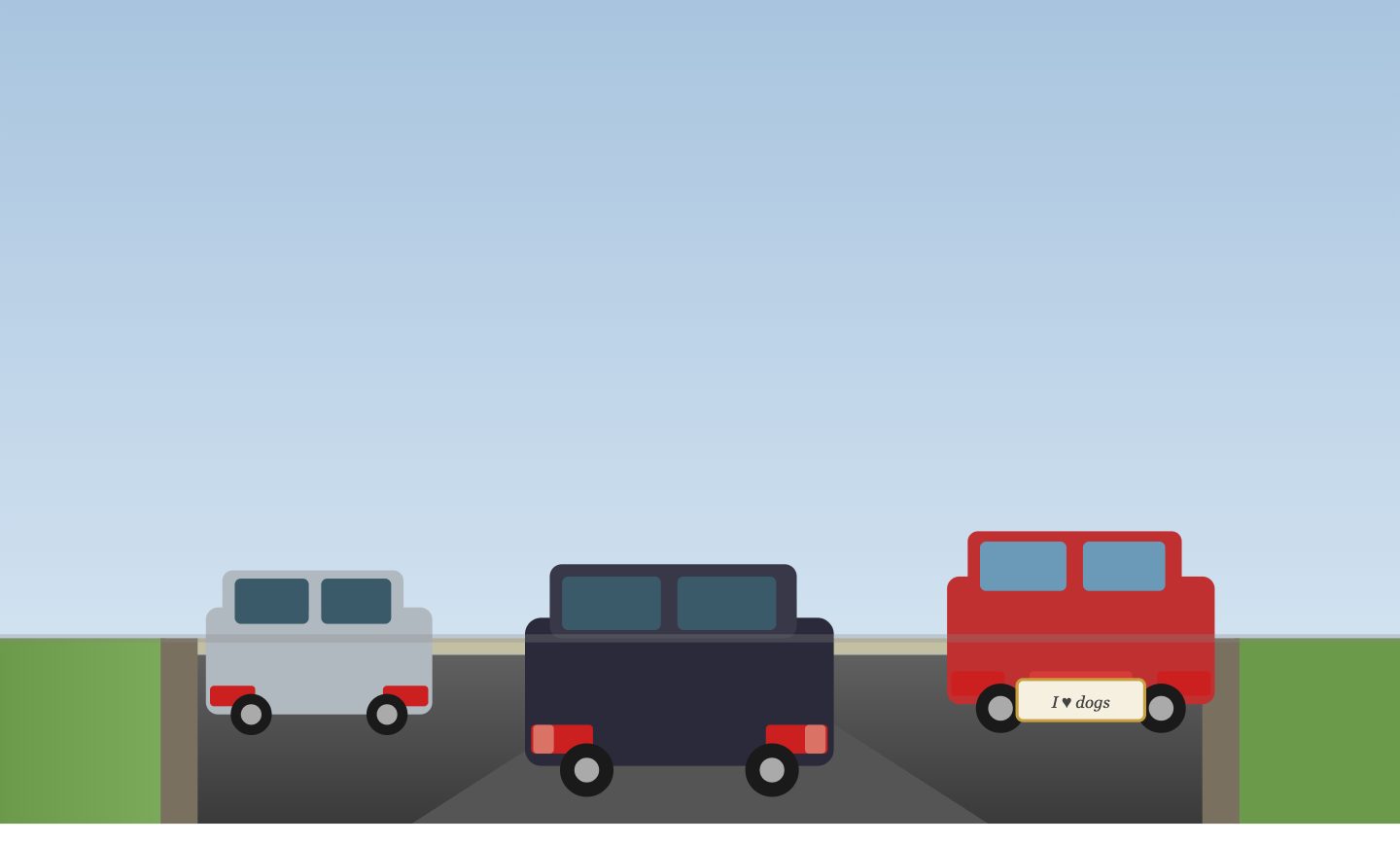
And that, perhaps, is the simplest way to understand what has gone wrong. We have all become bumper stickers to each other—reduced to symbols, slogans, and signals standing in for the full, messy, contradictory human being behind them. The internet promised us connection, and instead delivered us caricatures.
And even when it comes to people we know in person, when we become exposed only to certain opinions, it reduces the person as a whole. An idea of a person is much easier to dislike.
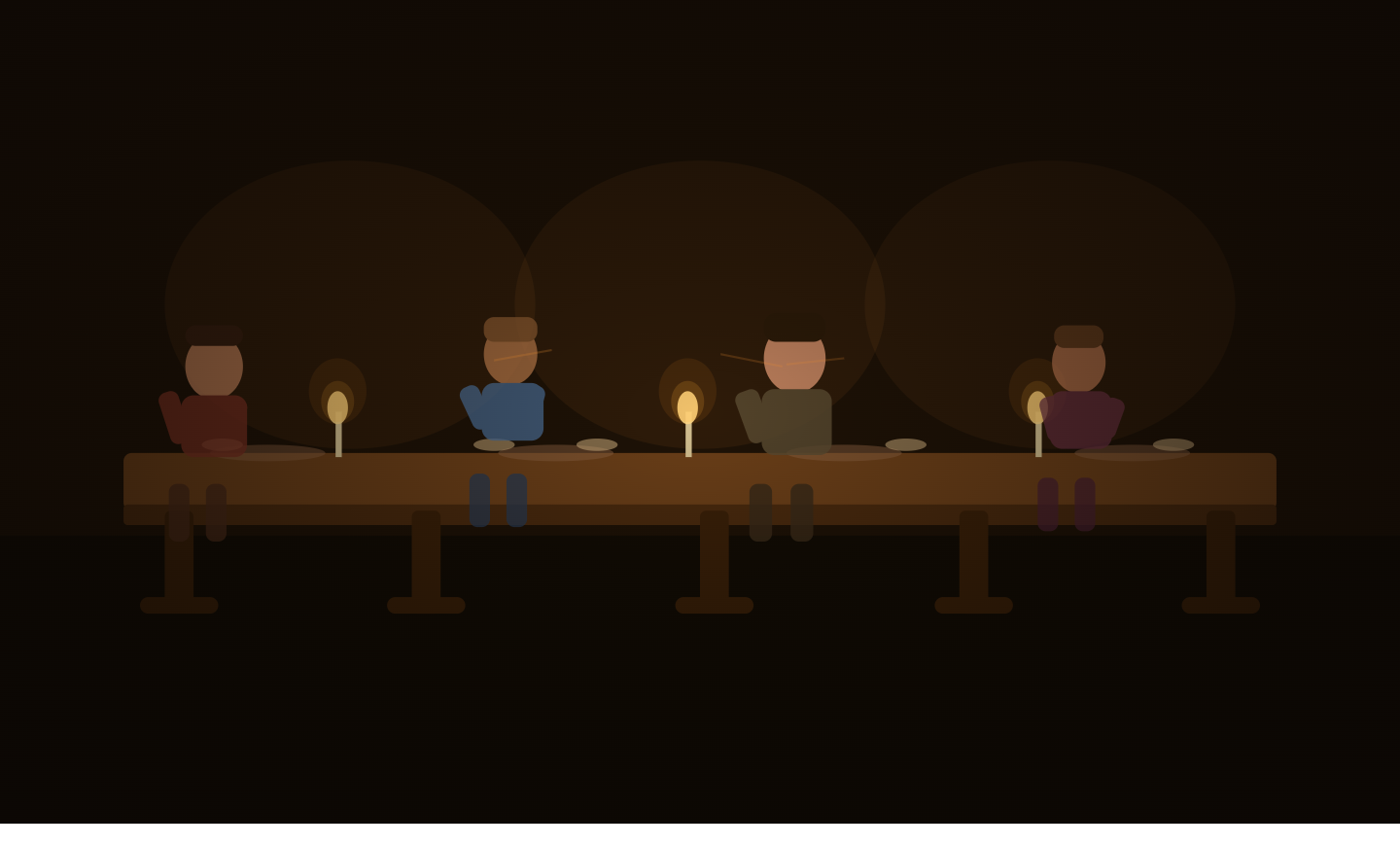
The antidote, I suspect, is not more discourse. It is more presence in each other’s lives. It’s in having dinners together, and going on hikes, and sharing laughs and drinks. It’s also in not judging the entire person over a single inflammatory sentence, but taking the time to ask them what they mean, and pushing back when it’s warranted.
The more we retreat into groups of people who only agree with us, the more radicalized we all become because pushback disappears. The friction that sharpens thinking and challenges bad ideas stops reaching the people who need it most as we surround ourselves only with those who think alike. Views harden, get affirmed, get amplified, and grow more extreme.
But people are more than just avatars or cliches in bios. They are not their yard sign, the car they happen to drive, or a bad social media post. They are the accumulation of their life experience, meals shared, grief and trauma, creativity and skill, favors they’ve done for others, how they treat others, how they make us feel when we are around them. None of that can just be squeezed into a short bio.
We are not a word, or a sentence. We are not a paragraph. We are book that keeps adding pages.
We are connected, yes. But we lack real connection.
If you found this story useful, please consider supporting my work by sharing, becoming a paid subscriber, or making a one-off donation via Buy Me a Coffee ☕️.
We are the sum of our experiences, good and bad and indifferent. Everyone has a “the rest of the story” life hidden away. Thanks for this wise essay.
KB: The more we retreat into groups of people who only agree with us, the more radicalized we all become because pushback disappears.
Indeed. ICYMI, an old post -- 2013 -- on the topic by the co-founder of Wikipedia, Larry Sanger, about "Internet Silos":
QUOTE; Edge: Internet Silos
We should be worried about online silos. They make us stupid and hostile toward each other.
Internet silos are news, information, opinion, and discussion communities that are dominated by a single point of view. Examples are the Huffington Post on the left and National Review Online on the right, but these are only a couple of examples, and not the worst, either. In technology, Slashdot is a different kind of silo of geek attitudes. ...UNQUOTE
https://www.edge.org/response-detail/23777