
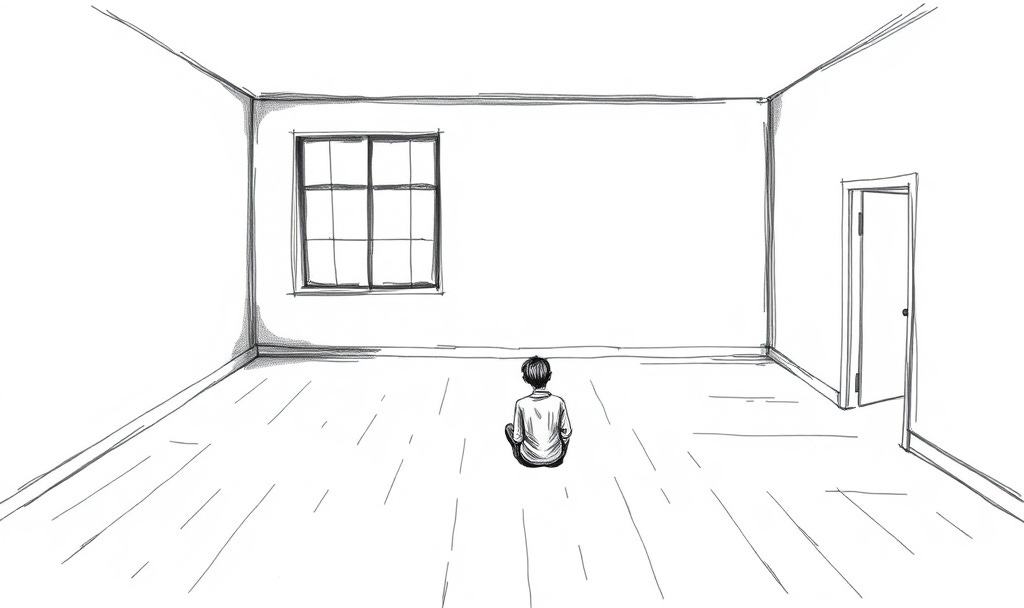
Where did boredom go?
When is the last time that you’ve been bored? This is a question I’d like you to ask yourself. Is it rare? Frequent? What do you do when you encounter this feeling? Do you sit with it or try to escape it? How does it make you feel? What happens if you sit with it long enough?
The reality is that in modern society, boredom has become almost an extinct species. Something we hear about, but rarely see. And that’s because we’re engineering it out of existence. The process is nearly complete.
Boredom is an uncomfortable feeling. But that’s also the point.
As I’ve described it in my recent piece for MS NOW (formerly known as MSNBC), “Boredom is a transitional state that frequently precedes curiosity, imagination and original thought.” It is a cognitive state when you encounter a certain uncomfortable friction: whatever you’re currently doing, thinking, or experiencing isn’t sufficiently satisfying.
“Boredom is not a bug in human cognition. It’s a complex neurological feature that can fuel introspection, invention and the activation of the brain’s default mode network,” I write.
Neuroscientists say that we’re bored when our attention system and motivation system are out of sync. When bored, the anterior cingulate cortex detects a mismatch between what you are doing and what you want to be doing, and the insula reacts. But all sorts of chemicals and systems like get involved, like the Default Mode Network, Executive Control Network, Salience Network, and the edopaminergic system. When dopamine (the reward neurotransmitter) drops, the brain seeks something to restore engagement. That can take the form of curiosity and innovation, or thrill-seeking and aggression. So, the same neural discomfort that leads one person to invent a new tool can also drive another to start a war.
(I prefer the former)
Except, can it even happen?
We live at a time when it’s very easy to fill each moment. Our devices are always there for us 24/7: social media, YouTube shorts, TikToks, doom-scrolling…It’s all available to comfort us the moment we start to drift into boredom, bringing it to a halt.
According to a survey tracking time use, conducted by the U.S. Bureau of Labor Statistics in 2014, 83% of American adults reported that despite having more free time, they spend no time at all “relaxing or thinking.” Things have only gotten worse.
As of 2026, adults check their phone nearly once every five minutes, according to data collected by Reviews.org, surveying 1,000 adults. So many of us can’t even eat dinner or watch TV without glancing at our phones.
In my piece for MS NOW, I focus more on the effects of AI on children during their critical developmental stages, but of course the effect on adults is similarly profound.
These new LLMs/AI tools are designed to minimize cognitive friction. They cater to us by analyzing our behavior, data, preferences, patterns, and interactions so that content can be personalized in a way that keeps us engaged longer. And they adapt continuously.
Your search bar predicts your question before you’ve typed it in, and it gets answered before you’ve even had a chance to think about it. It shares additional research and summaries before you’ve even asked for them. You don’t need to sit with a problem long enough that a novel solution might appear. It’s constantly adapting to you, filling in every moment of silence and friction instantly—ultimately outsourcing your creative thinking and hindering introspection.
And yet we’ll do anything to avoid being bored. In one study—shockingly—participants chose to self-administer electric shocks to themselves because being alone with their thoughts was so unpleasant. Participants were taken into an empty room with no windows, no phones, and were asked to entertain themselves with their thoughts for less than 15 minutes. That’s it, just FIFTEEN MINUTES. And yet, some had chosen to electrocute themselves because something—even pain—was so preferable to nothing.
People also eat too much junk because they are bored. They start fights because they are bored. They get into all sorts of trouble. But they also create, invent, think.
Boredom is essential.
As the playwright/screenwriter John Patrick Shanley once told me, when asked about writer’s block: “Stare at an empty page long enough and you’ll get so bored you’ll start to fill it.” But you can’t do that if the moment it feels uncomfortable you reach for your device.
I think about boredom a lot these days. I miss it. I recognize the damage I’ve done to myself by excluding it from my life and I struggle to put it back in. I understand its significance, but find it difficult to actively choose it against all the temptations that have declared boredom their enemy.
Our technology is literally engineered to keep boredom out of our lives. To gain it back, we have to not only make a conscious effort as individuals, but we also have to change the systems we use. We have to redesign our technology. And that won’t be easy.
There’s a lot more to say, but for now, let’s all take 15 minutes today and just do nothing—without electrocuting ourselves.
WAIT! Before you do that, READ my Opinion piece: Boredom is better for children than AI will ever be.
⚠️ PSST…
I’ve been writing this Substack for many years now, and still no bestseller badge. You know how frustrating that is? Makes me feel like a total outcast loser. Other Substack writers point at me and laugh. So if you want to help resolve that frustration/trauma and save me from having to pay a large therapist’s bill, consider becoming a paid subscriber. You’ll be helping support my work, get sent exclusive posts, and gain access to a pretty extensive archive. So it’s a win/win — for you, me, but probably not my therapist.
Want to support my work? Here’s how you can help:
Consider becoming a subscriber
Share my posts and Substack with people who might enjoy it
Make a one-off donation via Buy Me a Coffee
Pick up a copy of my book, No Apologies: How to Find and Free your Voice in the Age of Outrage


An important message! Makes me think of philosopher Josef Pieper's famous book "Leisure: The Basis of Culture," in which he restates a point even the ancients knew: that a productive and happy life, as well as a creative culture, actually require reasonably generous amounts of unscheduled, unhurried, unplugged downtime. Of course this is very countercultural in our day of hectic 24/7 work, motion, connectivity and continuous dopamine hits. Though Pieper's work is to me an uplifting book, it also carries this warning: "Unless we regain the art of silence and insight, the ability for non-activity, unless we substitute true leisure for our hectic amusements, we will destroy our culture -- and ourselves."
I couldn't agree more with this.
But although more and more people rightly saying we need to be bored again, the real frontier is navigating that.
Boredom used to be incidental - now it has to be intentional. And based on five months of experience of doing it daily (in my case, on my commute) I've convinced that there are techniques we can usefully use to deal with the silence, and make it feel like it's positive training rather than gritted teeth punishment.